Why Most Kids Quit Piano (and How Great Parents Prevent It Without Nagging!)
🎹Why Most Kids Quit Piano (and How Great Parents Prevent It Without Nagging!)
Piano Parenting & Home Support — Blog 16
Most parents assume children stop piano lessons because they “don’t like music” or “don’t want to practise.”
But in 99% of cases, that’s not the truth.
Kids don’t quit piano because music is difficult.
They quit because theexperience around the musicbecomes heavy — confusing, stressful, or emotionally unsafe.
And here’s the empowering part:
The person with the greatest influence over whether a child stays or quits isn’t the teacher.
It’s you— the parent.
This blog is the roadmap I wish every family had from day one.
⸻
🎼Part 1 — Why Children Really Want to Quit (It’s Not What You Think)
Most parents assume the reason is:
• Lack of talent
• Laziness
• No discipline
• Poor attention span
• “They just don’t like it”
None of these explanations are actually accurate. Children rarely dislike music.
What they dislike is how the learning process feels.
Here are the real reasons:
⸻
1. They don’t feel “capable,” even when they actually are.
When a child hears too many corrections without clear recognition of improvement, they begin to believe:
“I’m not good at this.”
Children internalise mistakes far more deeply than adults.
If they don’t feel small wins, they naturally want to withdraw.
⸻
2. The practice environment feels emotionally unsafe.
A child may quietly think:
“If I get this wrong, someone will be upset.”
Stress and the learning brain do not mix.
When practising at home becomes tense, a child protects themselves by avoiding the piano altogether.
⸻
3. Practice turns into a parent–child battleground.
If every reminder becomes a negotiation —
or worse, an argument —
the child begins to associate piano with conflict instead of creativity.
Whenfamily tensionbecomes louder than the music, quitting feels like relief.
⸻
4. They can’t see their own progress.
Children rarely quit because the music is too hard.
They quit because they feel stuck.
Without visible progress, motivation drops rapidly.
Children need signposts, not vague encouragement.
⸻
5. They feel alone in the journey.
Many kids say (in their own ways):
“I feel like I’m doing this by myself.”
If the process becomes isolating, quitting is simply the child trying to escape loneliness.
⸻
🎵Part 2 — How Great Parents Keep Children Going (Without Nagging)
A successful piano journey isn’t built on pressure.
It’s built on connection,consistency, and calm presence.
These strategies work in every household I’ve ever taught, regardless of background.
⸻
1. Replace “reminding” with “accompanying.”
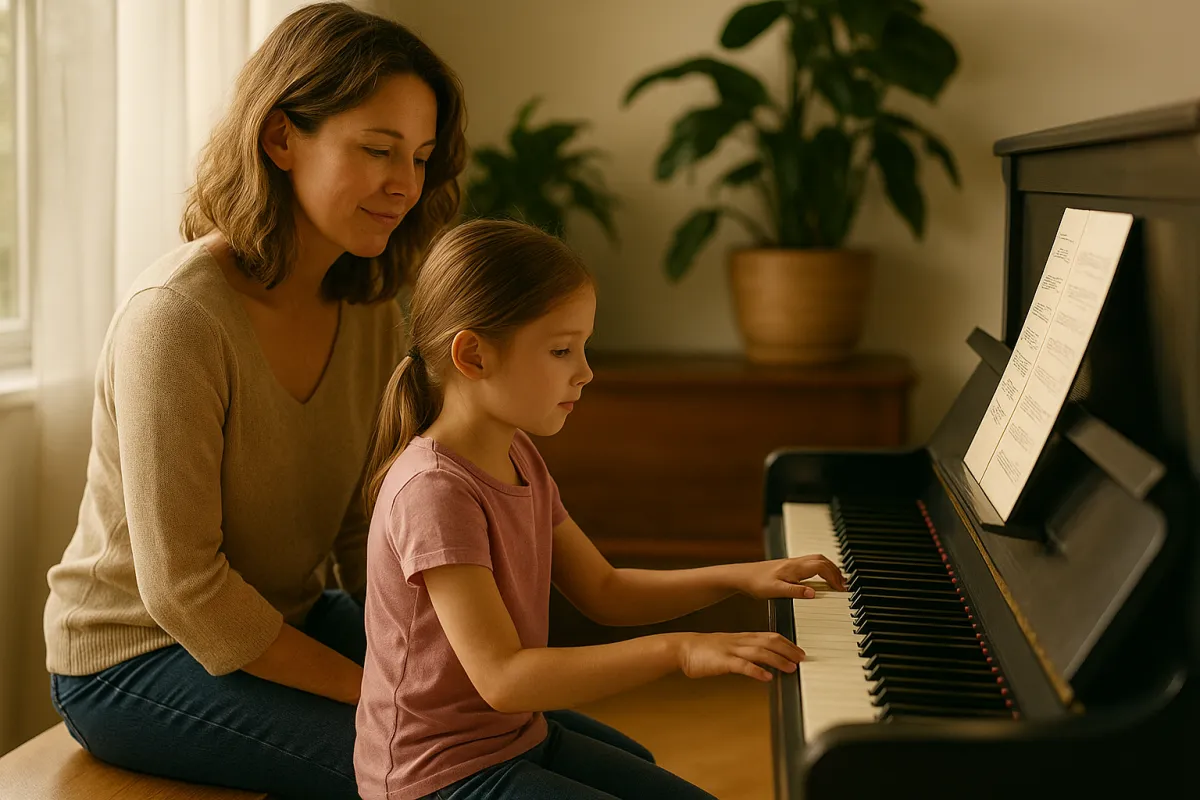
Children practise better simply because someone isthere.
You don’t need to instruct or understand the piece.
Just sit nearby for the first few minutes — reading, sipping tea, doing nothing.
Presence reduces resistance.
Children feel supported, not judged.
⸻
2. Use micro-practice sessions, not long battles.
Long practice sessions drain energy — both yours and your child’s.
Try an effortless structure:
• 3 minutes for warm-up
• 2 minutes for one tricky section
• 3 minutes to try it again cleanly
Eight minutes.
No drama.
No conflict.
Small wins build big momentum.
⸻
3. Help your child notice progress they cannot see.
Children don’t naturally track improvement. You need to narrate it for them:
• “Your tone today is clearer.”
• “This bar was smoother than yesterday.”
• “You reached the end without stopping.”
These observations create confidence.
Confidence keeps them playing.
⸻
4. Keep your tone neutral, especially during mistakes.
Most children are more sensitive to tone than to words.
Instead of:
“You’ve already practised this! Why is it still wrong?”
Try:
“Let’s try that bit again.”
Calmness creates safety.
Safety creates persistence.
⸻
5. Create a music-friendly home culture.
You don’t need musical background.
You just need musical behaviour.
These gestures matter more than ability:
• No sighing during practice
• No comparisons with siblings or other children
• No jokes about difficulty
• Genuine curiosity about what they’re playing
When the atmosphere is gentle, children open up effortlessly.
⸻
🎹Part 3 — Children Continue When They Feel Connected, Not Controlled
A child doesn’t continue piano because it’s easy.
They continue because it feels meaningful — and because they know someone believes in them.
Your role is not to “fix mistakes.”
Your role is to keep the environment emotionally stable.
If you:
• sit beside them for two minutes
• notice one small improvement
• stay calm during errors
• show interest without pressure
…your child will automatically stay longer in the piano journey.
You are not the backstage crew.
You are the co-pilot.
⸻
🎧The Real Gift: Your Child Is Not Learning Piano — They’re Learning Themselves
Parents often think piano is about musical skill.
But the deeper training is invisible:
• Self-confidence
• Focus
• Discipline
• Emotional regulation
• Perseverance
• Pride in slow progress
These qualities shape adulthood far more than any ABRSM certificate.
Piano happens to be the medium.
Character is the outcome.
And the parent’s role is the foundation.