🎶 “Stressful Day? Your Piano Could Be the Best Therapist You’ve Ever Had”
🎶 “Stressful Day? Your Piano Could Be the Best Therapist You’ve Ever Had”
Modern life is a full-contact sport. Deadlines pile up, inboxes overflow, and traffic somehow moves at both a crawl and a sprint. By evening, your shoulders are tight, your mind’s fried, and your patience is hanging by a thread.
Here’s a thought: before pouring another glass of wine or doomscrolling TikTok, what if you sat down at the piano?
No, you don’t need to be Lang Lang. You don’t even need to play fluently. What you need is ten quiet minutes at the keys. Because the piano isn’t just an instrument — it’s a built-in stress reliever, waiting for you to touch it.
⸻
🌬 Calm by Design — Why Piano Plays Your Brain Into Balance
Science tells us music engages both halves of the brain at once — the logical left and the creative right. When they’re working in harmony, your nervous system gets the memo: “It’s safe now. Breathe.”
That’s why after a few minutes at the keyboard, your heart rate slows, your breathing deepens, and your mind feels clearer.
Even the physical mechanics are therapeutic:
• A steady rhythm mimics meditation.
• Repeated notes echo mindful breathing.
• Sound vibrations resonate through your body, grounding you in the present.
Forget expensive mindfulness apps — the piano already comes with a built-in reset button.
⸻
🕯 Ritual Over Perfection — How Playing Becomes Mindfulness
Here’s the secret: it doesn’t matter what you play. What matters is how you play.
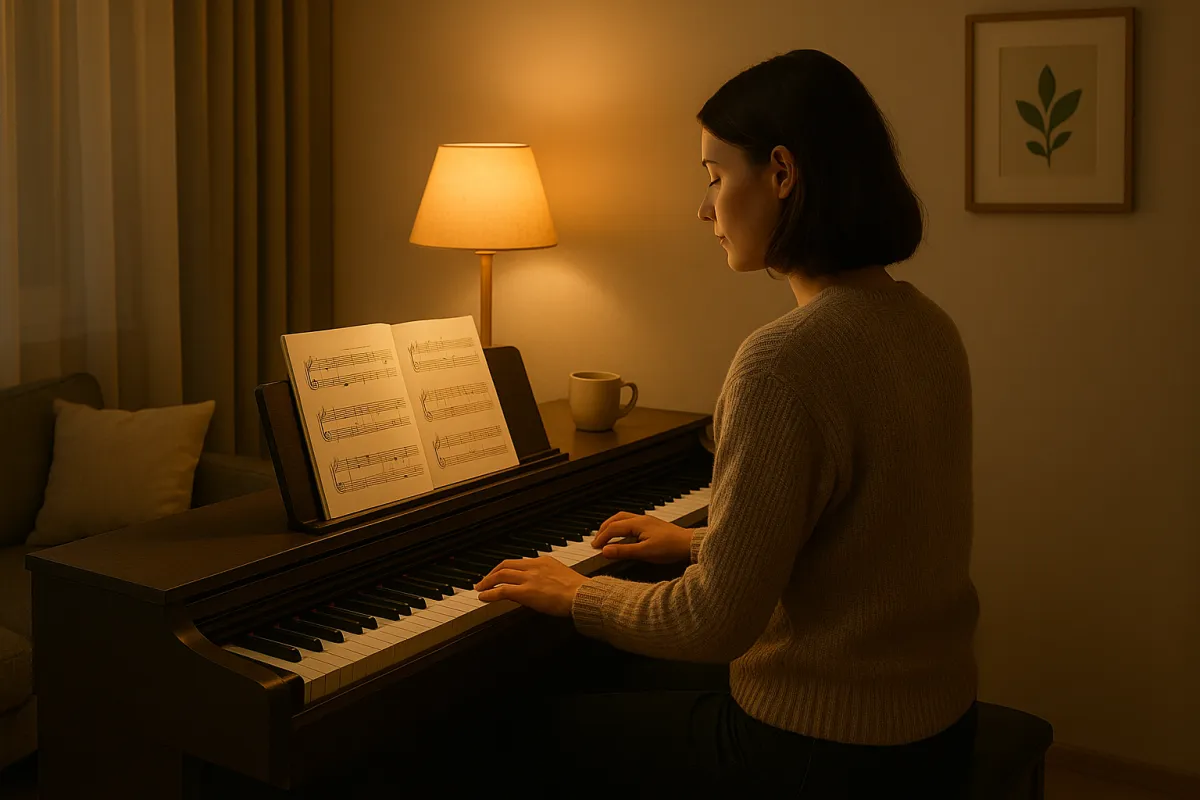
• Close the door.
• Place your phone face-down.
• Let your fingers wander.
Suddenly, your practice isn’t about achievement — it’s about presence. You’re not chasing flawless notes, you’re carving out space to be still.
One of my busiest students, a corporate lawyer, calls her evening piano time “the one appointment nobody can cancel.” It’s not performance; it’s sanctuary.
⸻
💡 Emotions Translated Into Sound — The Reset You Can’t Fake
Stress builds when feelings get trapped. Piano offers a safe release valve.
• Play stormy chords to burn off anger.
• Choose slow melodies to sink into reflection.
• Try something upbeat when you need an energy lift.
Unlike bottling emotions — or blasting them out on colleagues or family — piano lets you transform them. Tension becomes rhythm, worry becomes tone, frustration becomes motion.
The room may be the same when you finish. But you? You’re lighter.
⸻
🎬 Conclusion: Your Piano Is the Therapist Who Never Sends a Bill
Therapists are wonderful, and so are candles, apps, and retreats. But the piano? It’s always there. Always patient. Always ready to listen.
In ten minutes you can change the weather inside your mind. You don’t need to play perfectly. You just need to play.
Because sometimes the most powerful act of self-care isn’t silence, but sound. And your piano — humble, steady, waiting — may be the best therapist you never knew you had.
⸻
💬 Next in the series:
“Think Piano Only Improves Music Skills? Here’s How It Boosts Memory, Creativity, and Emotional Intelligence.”